


Inside the Triangle: A Chauffeur’s Guide to the Strangest 200 Square Miles in Massachusetts


If you’ve lived on the South Shore long enough, someone has told you about the Bridgewater Triangle. Usually in October, usually around a fire, and usually with more confidence than details. We spend our days driving these roads, so we figured it was time to set the record straight.
The Triangle is a roughly 200-square-mile patch of southeastern Massachusetts. Most maps today mark its corners at Abington, Rehoboth and Freetown, with Bridgewater in the middle. The name is newer than you’d think; a cryptozoologist named Loren Coleman came up with it in the 1970s. However, the legends it describes go back a lot further.
Depending on whose map you’re holding, our home base in Lakeville is either inside the lines or standing right on them, but we aren't sure we want to know!
This isn’t a post about proving anything, rather, it’s a driver’s tour of the stories, where they come from, and the spots you can actually visit in daylight in decent boots.
Start in the Middle: Hockomock Swamp
Every Triangle story eventually wanders back to Hockomock Swamp. The name comes from an Algonquian word usually translated as “place where spirits dwell.” The English who came later went with Devil’s Swamp, which tells you how comfortable they were.
At nearly 17,000 acres across six towns (Bridgewater, Easton, Norton, Raynham, Taunton and West Bridgewater), it’s the largest freshwater wetland system in the state. During King Philip’s War in the 1670s, Wampanoag warriors used it as a stronghold against the colonists.
The Insider Tip: The ghost stories get the attention, but the swamp is a big deal for wildlife too. It was designated an Area of Critical Environmental Concern in 1990, and more than 6,000 acres of it are state-managed and open to the public for hiking, paddling and wildlife viewing.
The Pro Tip: Hunting is allowed on that land, and deer season runs through the end of December, so wear blaze orange. Boots help too, the swamp stays wetter than you’d expect.

The Little People of Freetown
South of the swamp, Freetown-Fall River State Forest is where the Pukwudgies live, if you believe the stories. In Wampanoag tradition they’re little people and tricksters who can make trouble for anyone who disrespects them, and generations of hikers and campers have kept the tales going in these woods.
Freetown police once announced the placement a “Pukwudgie Xing” sign near the forest, though that was in 2017, so we cannot confirm whether it still stands. A slice of the forest sits in Lakeville, so this one really is in our backyard.
The forest itself is real and big: more than 5,000 acres with roughly 50 miles of trails and unpaved roads. Our vote for the best stop is Profile Rock, a 50-foot outcropping that the Wampanoag say shows the profile of Chief Massasoit. It’s an easy walk, the top looks out toward the southern coast, and it’s one of the few spots on this list that’s fine to bring the kids.
The Insider Tip: The Pukwudgie stories come from real Wampanoag tradition, and part of the forest is recognized as Assonet Band Wampanoag reservation land. Tell the stories, but tell them with some respect.
The Pro Tip: Hunting is allowed in parts of this forest too, so wear blaze orange. The state posts a trail map online. Download it before you go.

The Hitchhiker on Route 44
Every region needs one good ghost story about a road, and the Triangle’s is among the best known in New England. On Route 44 in Rehoboth and Seekonk, drivers have reported a red-haired man in a plaid flannel shirt standing at the roadside. Depending on who’s telling it, he also has a beard, a strange smile, and a talent for ending up in your back seat and then not being there anymore.
The best-known written version comes from Charles Turek Robinson, who interviewed witnesses in 1992 and 1993 and published their accounts in his book The New England Ghost Files. The road has since been called the scariest in Massachusetts, and a short horror film called 44 was inspired by it.
When a public-records site asked police departments across the Triangle’s towns for official records of the sightings, it came up empty, which has never slowed down a good story.
The Chauffeur’s Note: Every passenger we’ve ever picked up was on the manifest. We checked!
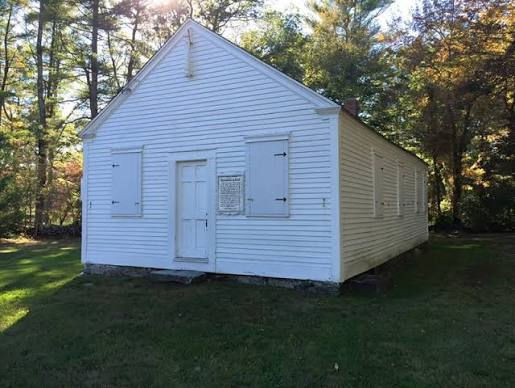
The Pro Tip: While you’re in Rehoboth, find the Hornbine School, a one-room schoolhouse that taught local kids until 1937 and was saved by preservationists in the 1960s. It’s only open for special events and programs, so check before you go. Local ghost lore says it’s haunted by whoever once sat at those desks.
Strange Lights and Very Big Birds
The sky has its own file for mysterious sightings. Local lore dates a fireball over Roxbury and Bridgewater to May 1760, and reports of odd lights have kept coming ever since.
Then there are the birds. In 1971, according to most retellings, a Norton police sergeant driving near Bird Hill in Easton, at the edge of the swamp, reported a winged creature taller than six feet with a wingspan of 8 to 12 feet, and filed a report with Easton police. Even Lakeville has a few UFO sightings logged with the National UFO Reporting Center, so maybe our home base is more in the triangle than we think!
The Pro Tip: If you want to the chance to look up and see something strange, find a field away from town lights, dress warmer than you think you need to, and bring something hot to drink.

The Real History in Our Own Backyard
Here’s the part we find the most interesting, and it needs no ghost. Assawompset Pond sits on the Lakeville and Middleborough line, nearly four square miles of water and part of a five-pond complex. The name is usually translated as “place of the white stones.”
In January 1675, the body of John Sassamon, a Christian Native man who had worked as an interpreter and adviser, was found beneath the ice here. Colonial authorities convicted three Wampanoag men of his murder and hanged them that June. Historians widely see that as the spark for King Philip’s War.
We drive past it all the time and it certainly looks a little different once you know the history.

Believe It or Not
Maybe the Triangle is a paranormal hot spot. Maybe it’s just a very good reason to take a long drive in October. Either way, there’s real history under the ghost stories: a protected wetland, a state forest, a schoolhouse somebody cared enough to save, and a lot of Native history worth knowing. Plus, much of it is open to the public.
If you’d rather listen than drive, Aaron Mahnke, the creator of Lore, built a two-season audio drama called Bridgewater around the area’s folklore, starring Misha Collins and set in the real Triangle.
Got a Triangle story of your own, like a strange light, a spooky road, or a legend your grandfather swore by? Let us know in the comments below!
Thank you all for reading, and remember, we do a new blog AND newsletter every month. Make sure to follow our socials and subscribe to our email list to stay in the know about new blogs, company updates, and current specials.
Last but not least, Happy Halloween from our family to yours!
A Note from The Luxor Family: If you’d like to see a few of these spots in one afternoon, in daylight, without anyone drawing the short straw as designated driver, give us a call and we’ll plan the route. We know the roads, and we’ve never lost a passenger to the swamp.


Comments